
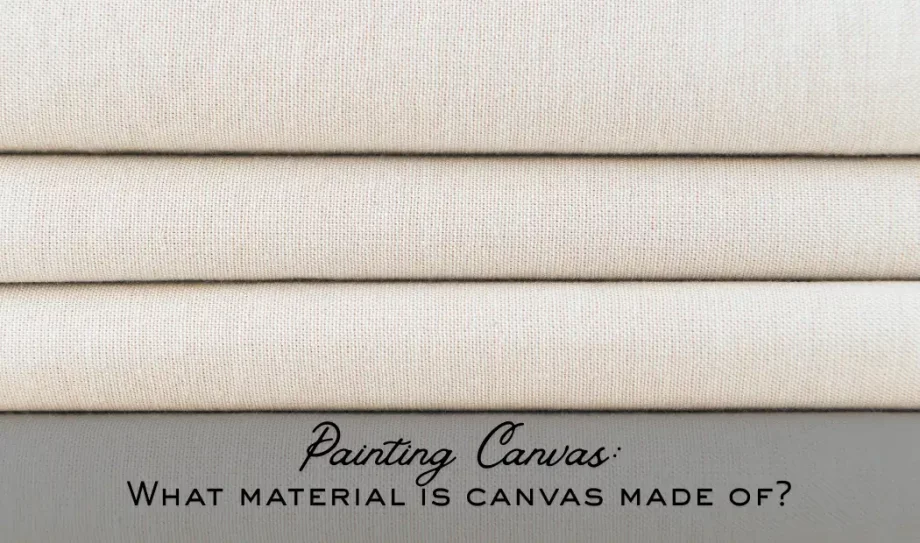
You stand before a blank white sheet and think — what material is canvas made of? It feels sturdy, soft, and timeless. Every brushstroke dances across it like a spell. But what exactly is this magical surface that holds the power to turn colors into art?
Canvas is not just a fabric; It’s an artist’s best friend, the silent partner behind every masterpiece. From vintage oil paintings to modern acrylic vibes, every creation begins with this woven wonder. Today, we’ll unravel the secrets of canvas — its materials, types, making process, and how it becomes the beating heart of your artwork.
What Is Canvas And What Material Is Canvas Made of?
The word “canvas” comes from the Latin word cannabis, meaning “made of hemp.” Early artists used hemp fiber to make strong, coarse fabric. Over time, artists shifted to cotton, linen, and polyester.
So when you ask, what material is canvas?, the answer lies in these three major types:
Cotton: Soft, affordable, and easy to stretch. Great for beginners and acrylic artists.
Linen: Luxurious, durable, and used by professionals. It’s smooth and holds oil paint beautifully.
Polyester: Synthetic and modern. Perfect for digital printing and long-lasting wall art.
Types of Canvas Material
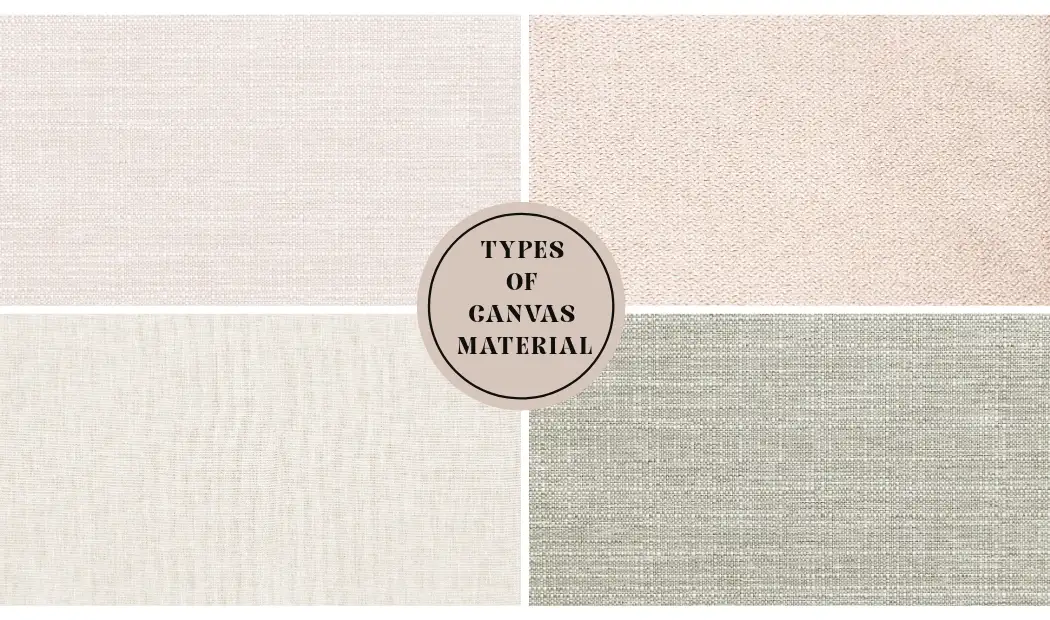
Knowing the types of canvas material helps you pick the perfect base for your painting style.
1. Cotton Duck Canvas:
The most common choice. It’s tightly woven, smooth, and affordable. Cotton duck canvas is excellent for acrylic painting and student projects.
2. Linen Canvas:
Strong, refined, and elegant. It gives your brush smooth motion and holds detail perfectly. It’s pricier but worth every stroke.
3. Polyester Canvas:
Synthetic, uniform, and flexible. Often used for printed material canvas wall art because it holds color vibrancy for years.
4. Blended Canvas:
A mix of cotton and synthetic fibers. It’s the middle ground — durable like polyester, soft like cotton.
How Is Canvas Material Made?
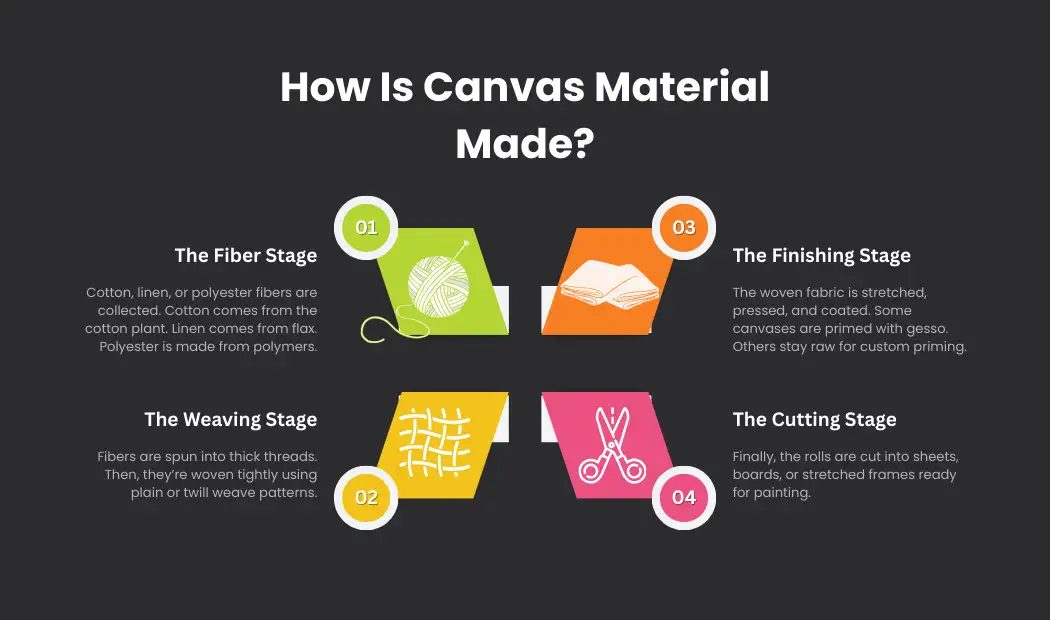
Let’s go behind the scenes. Ever wondered, “how is canvas material made? ” Here’s the secret recipe:
The Fiber Stage: Cotton, linen, or polyester fibers are collected. Cotton comes from the cotton plant. Linen comes from flax. Polyester is made from polymers.
The Weaving Stage: Fibers are spun into thick threads. Then, they’re woven tightly using plain or twill weave patterns.
The Finishing Stage: The woven fabric is stretched, pressed, and coated. Some canvases are primed with gesso. Others stay raw for custom priming.
The Cutting Stage: Finally, the rolls are cut into sheets, boards, or stretched frames ready for painting.
Is Canvas Material Waterproof?
A common question — is canvas material waterproof? Naturally, no. Raw cotton or linen canvas absorbs water quickly. But that’s not the end.
Modern canvases can be made water-resistant with special coatings, varnish, or wax sprays. This is useful for outdoor displays or humid climates. A waterproof seal also keeps colors from fading. So, always finish your art with a protective layer.
How to Stretch Canvas?
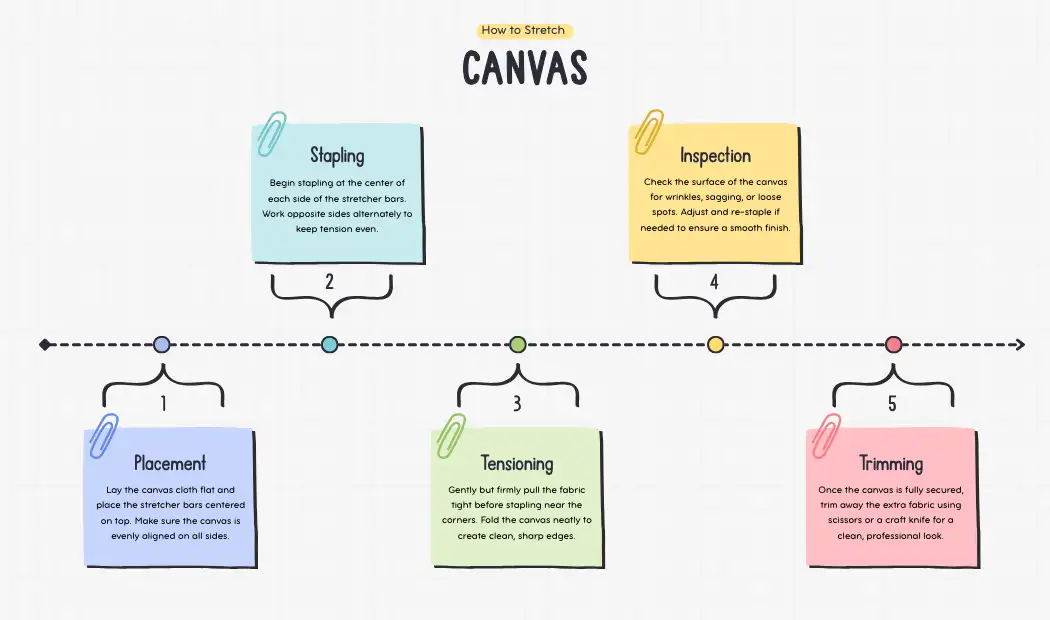
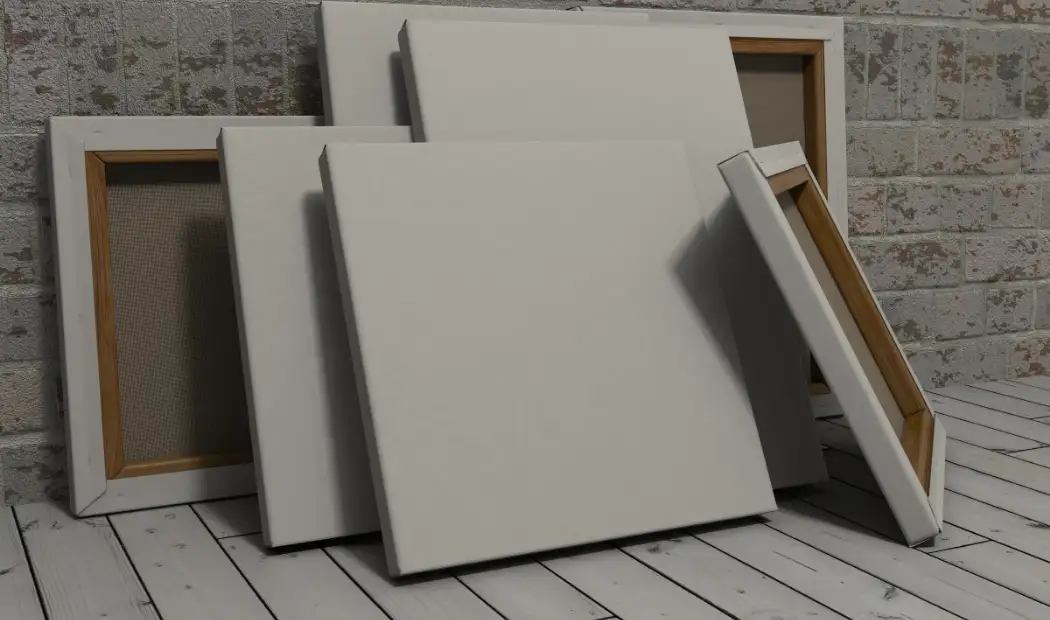
Want to prepare your own? Here’s how to stretch a canvas:
- Place canvas cloth over stretcher bars.
- Start stapling from the center of each side.
- Pull the fabric tight before stapling corners.
- Check for wrinkles or loose areas.
- Trim the extra fabric neatly.
Canvas Textile Material vs Canvas Cloth Material
People often mix these up. Canvas textile material refers to the fabric structure — the tightly woven threads. Canvas cloth material refers to the physical product you paint on. The first is the science; the second is the art. Both matter equally.
When you buy art supplies, you’ll see both terms on packaging. Just remember — they both mean your next masterpiece is waiting.
Canvas Painting Materials List
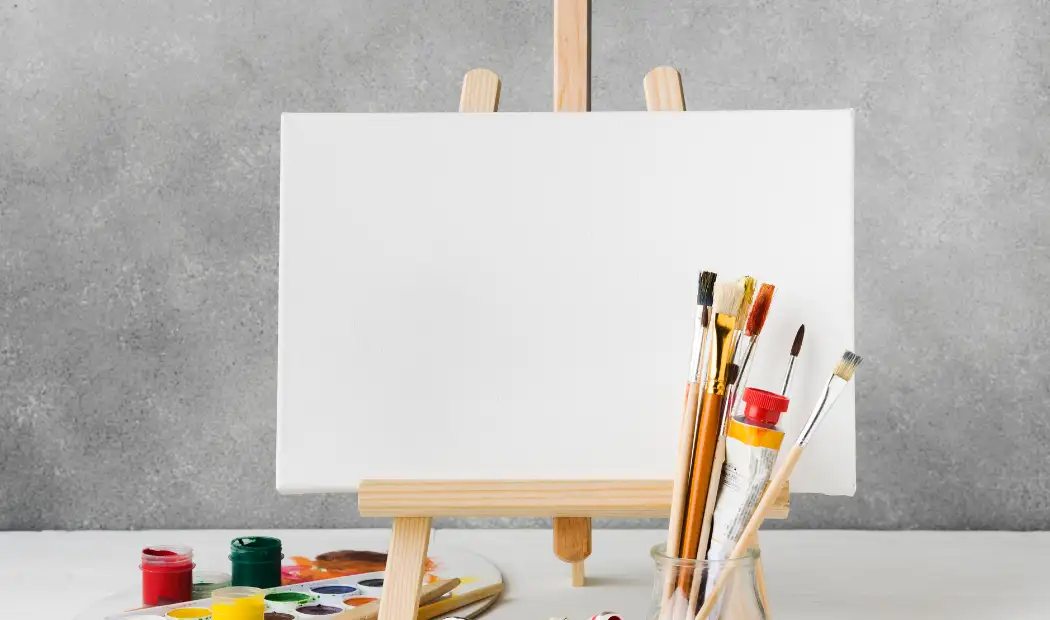
Before you start your canvas painting journey, prepare this canvas painting materials list:
- Canvas or stretched canvas board
- Acrylic or oil paints
- Brushes of different sizes and shapes
- Palette and palette knife
- Gesso primer
- Easel or stand
- Water or solvent jars
- Soft cloths for cleaning
- Varnish or sealant
Spray Paint for Canvas Material
If you love edgy, modern styles, try spray paint for canvas material. It gives instant gradients and bold effects. Choose non-toxic, artist-grade spray paints.
Hold the can at least 12 inches away. Spray in light layers. Let each coat dry. You can mix spray paint with brushwork for an urban, expressive look. Always use spray paint in a ventilated space or outdoors. Spray paint on canvas can create galaxy art, graffiti designs, or modern pop-art vibes.
Canvas Painting Tips for Beginners

Here’s how to make your first canvas painting shine:
- Sketch lightly before painting.
- Prime your canvas with gesso for smoother application.
- Paint in layers. Let each layer dry before adding more.
- Experiment with textures using brushes, sponges, or palette knives.
- Seal your art with varnish for protection and shine.
Eco-Friendly Canvas Textile Material
Modern artists care about sustainability. Canvas textile material now comes in eco options. Organic cotton, bamboo blends, and recycled polyester are trending.
They reduce waste and feel just as good to paint on. If you’re eco-conscious, check labels for certifications like GOTS or OEKO-TEX. Art can be creative and kind to the planet.
Fun Facts About Canvas Material
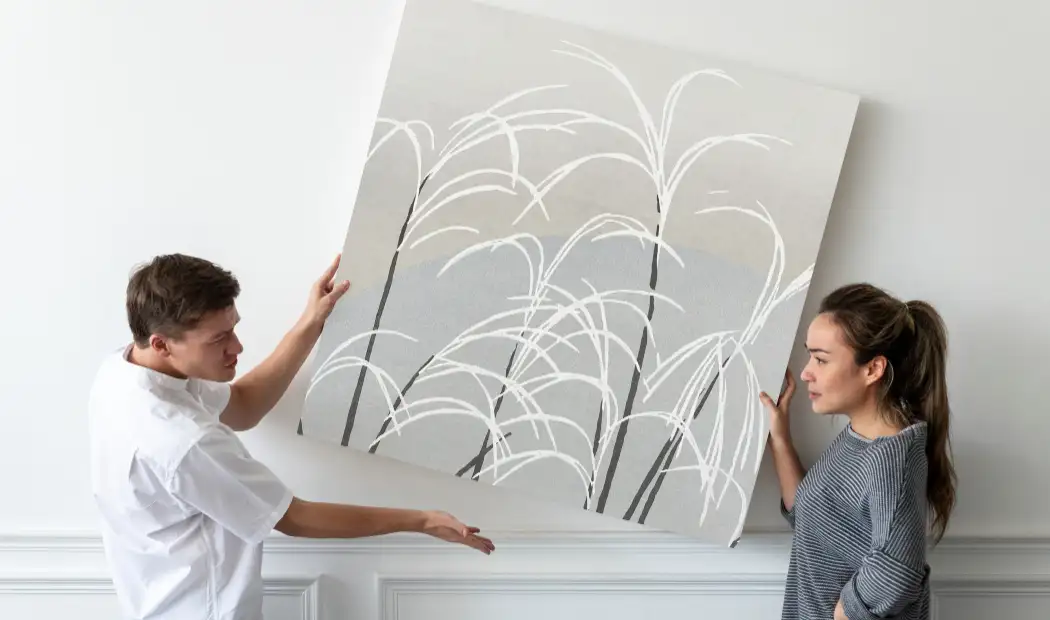
- Canvas sails powered ships before it carried art.
- Leonardo da Vinci used linen canvas for experiments.
- Cotton duck canvas got its name from the Dutch word doek, meaning cloth.
- Some high-end canvas materials last over 200 years with proper care.
Common Mistakes with Canvas Painting
- Painting on unprimed canvas — always prime first.
- Using too much water with acrylics — it can warp the canvas.
- Skipping varnish — colors fade faster without it.
- Leaving the back unsealed — humidity can damage it.
- Ignoring dust — always clean your canvas before and after painting.
How to Clean Canvas Material?
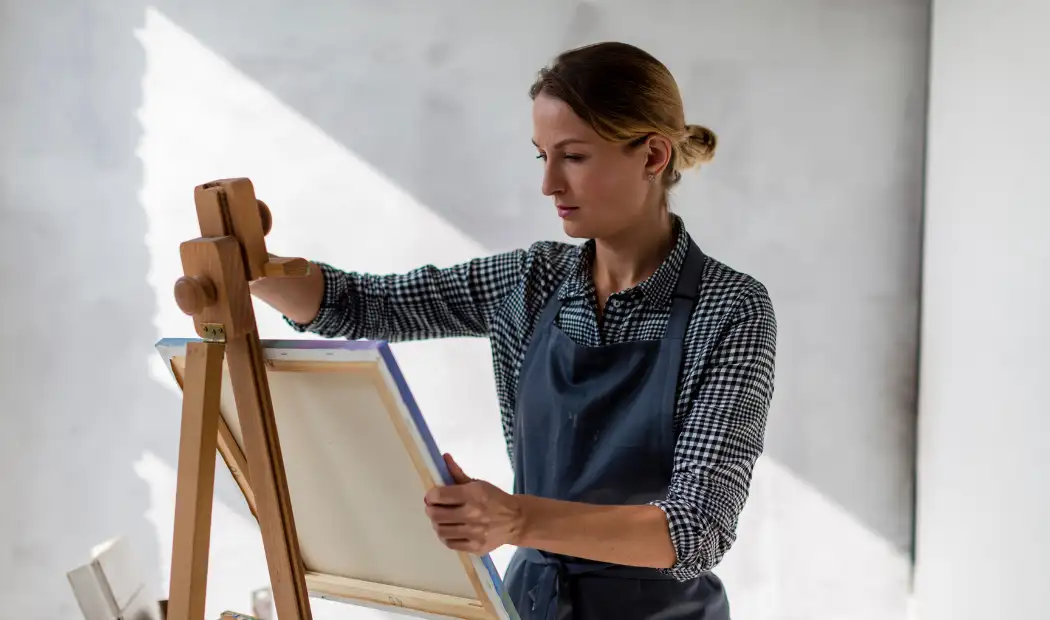
Let’s talk care. Knowing how to clean canvas material keeps your art fresh and safe.
- Dust lightly with a dry, soft brush or microfiber cloth.
- Never soak the canvas in water.
- For small stains, use mild soap and a damp cloth.
- Avoid harsh chemicals or alcohol-based cleaners.
- Always air dry and never use heat.
FAQ
CONCLUSION
Now you know what material is canvas made of and why it matters. From its fiber roots to your final stroke, canvas holds centuries of artistry and imagination. It’s not just a fabric — it’s a legacy of creativity woven in every thread.
Your canvas is more than a surface. It’s the heartbeat of your art. Treat it with care, understand its texture, prime it well, and watch your colors tell a story that lives forever.
Looking for awesome paint by number kits? Why don’t you visit Art of Paint by Number?